
Quick Answer: Bathroom remodel ideas on a budget work best when you focus on surfaces and fixtures rather than layout or plumbing. The most cost-effective upgrades — painting cabinets, replacing light fixtures, updating hardware, and adding DIY wall paneling — can transform a dated bathroom for $100 to $500 total, often in a single weekend.
The morning I moved into my first place, I stood in the bathroom doorway for a long time. Beige. Everything was beige. The walls, the cabinets, the countertop — all the same flat, defeated shade of nothing. There was nothing broken. Nothing wrong, technically. It was just a room that had stopped trying years ago.
I couldn’t afford to gut it. I had maybe $300 to my name after the security deposit. But I also couldn’t spend every morning in a room that made me feel like I was already losing before the day started. That’s when I started genuinely researching bathroom remodel ideas on a budget — not the $10,000 renovation kind, but the “I have a free Saturday and a debit card” kind.
What I found surprised me. Not because there were so many options, but because the options that actually worked were almost never the ones being pushed hardest.
Why Most Bathroom Renovation Advice Sets You Up to Overspend
Most guides on bathroom renovations lead with the big stuff: new vanities, new tile, new everything. And yes, those things look incredible. But they also cost $3,000 to $15,000 when you factor in labor, materials, and the inevitable surprises hiding behind old walls.
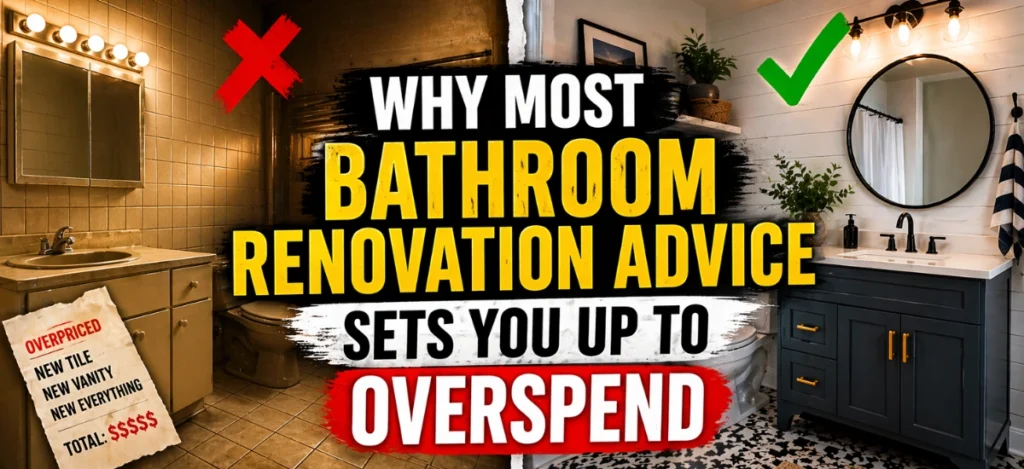
What nobody tells you upfront is that 80% of what makes a bathroom feel dated has nothing to do with the structure. It’s the surfaces. It’s the color. It’s the hardware that was installed in 2003 and hasn’t been touched since. Change those, and the room transforms — even if every pipe and tile underneath is exactly where it was.
What Is the Most Inexpensive Way to Remodel a Bathroom?
The most inexpensive way to remodel a bathroom is to work with what’s already there and change only what the eye actually sees. That means paint, hardware, lighting, and accessories — not layout, not plumbing, not tile removal.
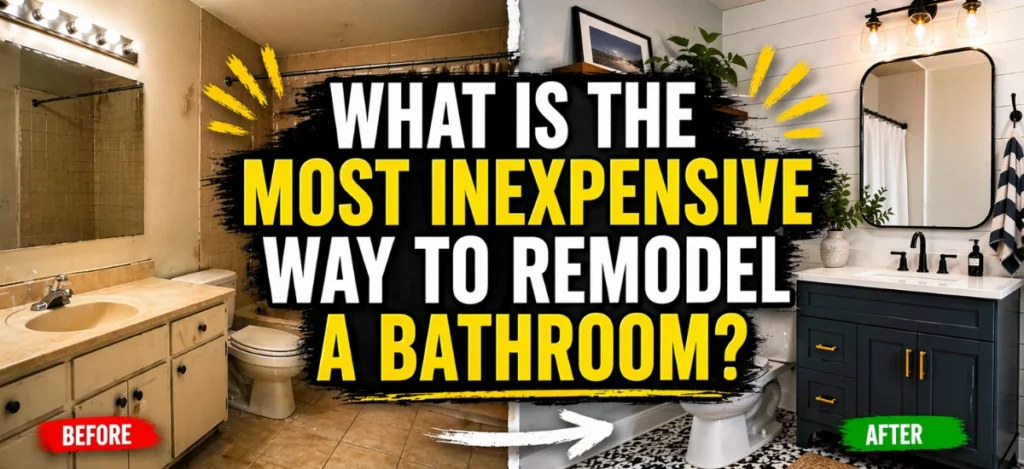
A full cosmetic refresh targeting cabinets, fixtures, lighting, and wall treatment can run anywhere from $150 to $600 depending on the size of the space and where you shop. That’s not a compromise. That’s a strategy.
How Much Does a Budget Bathroom Makeover Actually Cost in 2026?
This next part is worth saving. Here’s a realistic breakdown of what individual upgrades cost — sourced from current Home Depot, Lowe’s, and Amazon pricing as of early 2026.
| Upgrade | DIY Cost Estimate | Pro Labor Add-On | Impact Level |
|---|---|---|---|
| Painting cabinets | $30–$80 (paint + primer) | $150–$400 | Very High |
| Replacing light fixture | $40–$120 (fixture) | $80–$200 | High |
| Updating hardware (knobs/pulls) | $25–$70 | $0 (DIY-easy) | Medium-High |
| Peel-and-stick floor tile | $60–$150 | $100–$250 | High |
| DIY shiplap/wall paneling | $80–$200 | $200–$500 | Very High |
| New mirror | $30–$100 | $0 (DIY-easy) | Medium |
| Shower liner + curtain refresh | $20–$60 | $0 | Medium |
| Re-caulking tub/shower | $10–$20 | $75–$150 | Medium |
Estimates based on industry averages for a standard 5×8 ft bathroom. Prices vary by region.
According to a 2024 report by the National Association of Realtors, minor bathroom renovations recoup approximately 71 cents on the dollar at resale — making budget upgrades not just a cosmetic fix, but a smart financial move.
Which DIY Bathroom Remodel Ideas Give You the Most Bang for Your Buck?
Start with the two things that anchor every bathroom visually: the cabinets and the light. These two elements set the tone for everything else in the room. Change them, and suddenly the floor looks better, the walls look fresher, and even the old fixtures seem less offensive.
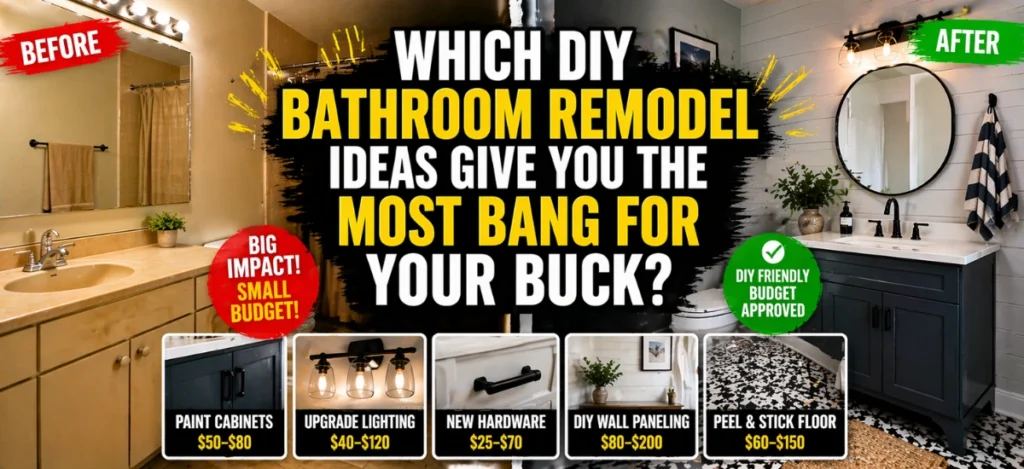
After those two, move to hardware. Drawer pulls and cabinet knobs are the jewelry of a bathroom. Most people skip this step because it sounds too small to matter. It doesn’t. Swapping out builder-grade brass knobs for matte black or brushed nickel pulls takes about 20 minutes and costs under $50 — and the difference is immediately visible to anyone who walks in.
Can You Do a Shower Remodel on a Budget Without Replacing the Whole Unit?
Shower remodel ideas on a budget almost always skip this answer: reglazing. Tub and shower reglazing is a professional service that refinishes the surface of your existing tub or shower walls for $300 to $650 — compared to $1,500 to $5,000 for a full replacement. The result looks brand new and lasts 10 to 15 years with proper care.
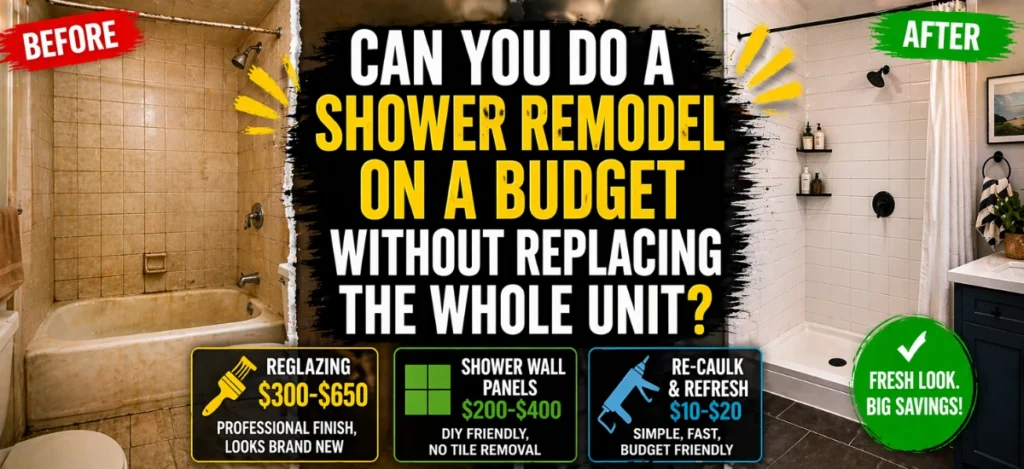
If you’re in DIY mode, shower wall panels — the rigid acrylic kind that glue directly over existing tile — are another option that costs $200 to $400 for materials. No grout. No demolition. A few hours of your weekend.
What Painting Cabinets Really Does to a Bathroom (and What It Doesn’t)
Painting cabinets is the single highest-ROI move in any bathroom makeover on a budget. A can of cabinet-specific paint (like Rust-Oleum Cabinet Transformations or Benjamin Moore Advance) and a Saturday afternoon can make wood cabinets look like they came out of a Restoration Hardware catalog.
Here’s the part that surprises most people: the color you choose matters less than the finish. Flat paint on cabinets chips and scuffs within months. Semi-gloss or satin is what holds up in a humid bathroom environment. Use a foam roller for the flat surfaces and a small angled brush for the details — that’s what keeps it from looking streaky.
What painting cabinets won’t do is fix structural damage, warped doors, or doors that don’t close properly. Fix those mechanics first, then paint.
How Do You Upgrade Lighting Without an Electrician?
You can swap out most bathroom vanity light fixtures yourself without touching any wiring — as long as you’re replacing like-for-like (same junction box, same number of bulbs). Turn off the breaker, unscrew the old fixture, connect the matching wire colors, and mount the new one. Most fixtures include a wiring diagram. The whole swap takes 30 minutes.
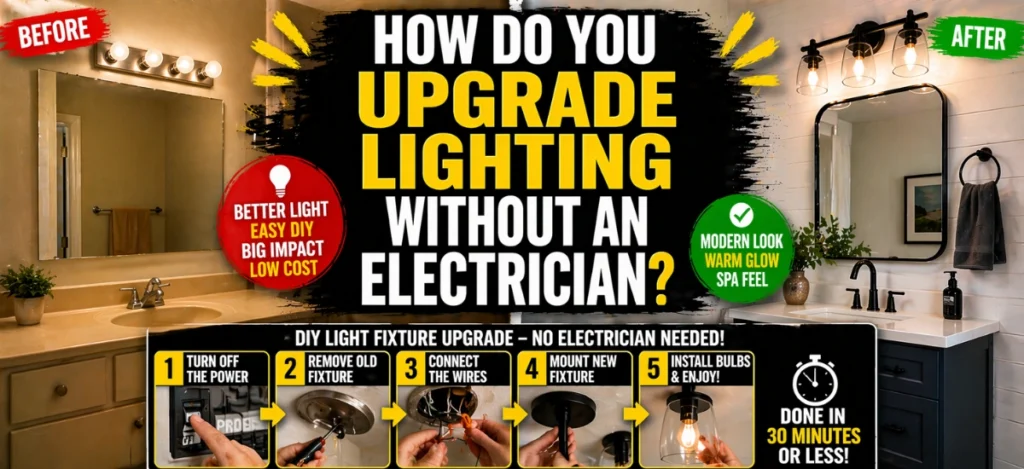
What you’re really paying for when you hire an electrician for a simple fixture swap is peace of mind, not complexity. If you’re reasonably comfortable with basic tools and follow the process carefully, this is fully DIY-friendly.
Lighting is also where you can steal a luxury bathroom trick: warm-white bulbs (2700K–3000K) feel spa-like. Cool-white bulbs (4000K+) feel clinical. The bulb choice alone changes the emotional feel of the entire room.
Is DIY Wall Paneling Actually Worth It?
Yes — with one condition. DIY wall paneling, whether it’s shiplap, beadboard, or modern slat panels, adds enormous visual texture and dimension to a bathroom that currently has nothing but flat painted drywall. It looks expensive. It photographs well. It makes people ask “wait, did you renovate?”
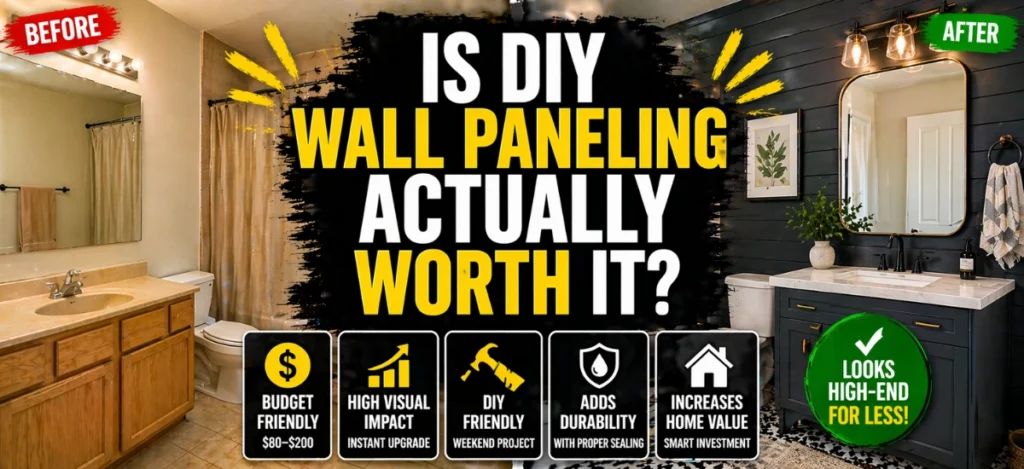
The condition is moisture. Any wood-based paneling in a bathroom needs to be properly primed, painted with a moisture-resistant paint, and kept away from direct water exposure. In a half-bath or powder room with no shower, it’s nearly risk-free. In a full bathroom, keep it on the wall opposite the shower and seal it well.
MDF shiplap panels from Home Depot run about $1.50 to $2.00 per square foot. A single accent wall in a standard bathroom costs roughly $80 to $120 in materials.
[KEY TAKEAWAYS]
- The most effective bathroom renovations on a budget focus on surfaces and visual elements — not plumbing or structure.
- Painting cabinets with the right finish (semi-gloss or satin) is the single highest-impact DIY upgrade for the least money.
- Upgrading lighting changes the emotional feel of a bathroom more than almost any other single change.
- Hardware swaps take under an hour and cost under $50, but deliver a visual punch that most people underestimate.
- Shower reglazing is a professional service most homeowners don’t know about — it costs a fraction of replacement and looks identical.
- DIY wall paneling works beautifully in bathrooms when moisture is properly managed with the right primer and paint.
- According to NAR, minor bathroom updates recoup roughly 71 cents per dollar at resale — budget upgrades are financially smart, not just cosmetically satisfying.
Frequently Asked Questions about Bathroom Remodeling
The cheapest way is to focus on paint, hardware, and lighting — all three together can cost under $150 and transform how the room looks and feels. As covered in the upgrade cost table above, these changes carry the highest visual impact for the lowest investment. You don’t need to touch a single tile or pipe.
Most cosmetic upgrades — painting cabinets, swapping hardware, replacing a light fixture — can each be completed in under four hours. A full weekend is realistically enough time to complete all of them together. Drying and curing time for cabinet paint (24–48 hours) is usually the longest wait.
Yes. Painting cabinets ($50–$80), updating hardware ($30–$60), replacing a light fixture ($60–$120), and adding a new mirror ($40–$80) together come in well under $500 and collectively make a bathroom feel like a different room. Add peel-and-stick floor tile and you’re still under $650 for a full transformation.
To make a bathroom look expensive on a budget, start by painting cabinets in a matte or satin finish, replacing dated hardware with matte black or brushed nickel pulls, and switching to warm-white bulbs in your existing light fixture. These three changes together cost under $150 and replicate the look of a high-end renovation.
For American homeowners with a functional but stained or dated tub or shower surround, reglazing is almost always worth it. At $300–$650 for a professional reglaze versus $1,500–$5,000 for replacement, the savings are significant, and the result lasts a decade or more with proper care.
Peel-and-stick tile works well in bathrooms as long as it’s applied to a clean, dry, smooth surface and kept away from areas of direct water contact like directly inside a shower. For floors and walls in dry zones, quality peel-and-stick products from brands like Smart Tiles or FloorPops hold up well and are removable, which makes them renter-friendly.
For cosmetic upgrades — painting, hardware, lighting swaps, and wall paneling — no permit is required in any U.S. state. Permits are typically only needed when you move plumbing, alter electrical circuits, or modify the structure of the room. Always check your local municipality if you’re unsure.
A bathroom renovation updates what’s there — new finishes, fixtures, and surfaces without changing the layout. A bathroom remodel changes the actual structure or layout of the space, like moving the toilet or expanding the shower. Budget projects almost always fall under renovation, not remodel, which is why they cost so much less.
DISCLAIMER: The information in this article is intended for general informational purposes only. Any electrical work, structural modification, or plumbing change should be assessed by a licensed professional before proceeding. Costs cited are estimates based on national U.S. averages as of early 2026 and may vary significantly by region. Always consult a qualified contractor before undertaking work that affects the safety or structure of your home. Everyday Home Garden is not liable for any actions taken based on this content.