
For many home gardeners and even expert growers, winter is regularly seen as a period of inactivity. Snow-blanketed lawn beds look dormant, vegetation appears useless, and the boom seems to return to a whole stop. Because of this, snow is typically treated as a trouble to be eliminated rather than as a natural resource to be used wisely.
However, experienced gardeners understand that learning how to use snow in the garden can significantly improve soil quality, protect plants from winter stress, and prepare the ground for stronger spring growth. Snow is not just frozen water. It plays a critical role in insulating soil, regulating temperature, preserving moisture, and supporting long-term garden health.
In regions that enjoy normal snowfall, snow will become a part of the natural gardening cycle. When managed successfully, it works as a gradual-launch moisture supply, a slight soil enhancer, and a shielding barrier towards harsh climate conditions. Many gardeners unknowingly benefit from snow each yr without realizing how valuable it is.
This detailed guide explains 7 smart ways to use snow in the garden so that your plants, soil, and overall garden system remain healthy throughout winter and beyond. Each method is based on realistic gardening experience, herbal soil technology, and sustainable practices that assist long-term increase in preference to short-term effects.
Whether you preserve a home garden, a vegetable plot, or decorative flower beds, knowledge the advantages of snow for lawn soil and plant protection will help you make higher choices in the course of the wintry weather months.
Why Snow Is Actually Good for Your Garden
Before diving into specific tips, it’s important to understand why snow benefits gardens in the first place.
Snow acts like a shielding blanket. Unlike ice, which can damage flora, snow traps air among its flakes. This trapped air offers insulation, preserving soil temperatures more stable. Even while air temperatures drop notably, soil below snow remains hotter than the uncovered floor.
Snow additionally melts slowly. This gradual softening permits water to soak deep into the soil as opposed to running off the surface. As a result, plant roots receive constant moisture, which is particularly treasured throughout dry winters.
Another omitted gain is that snow consists of small quantities of atmospheric nitrogen. When snow melts, that nitrogen enters the soil, giving flora a mild nutrient boost earlier than spring growth starts.
In short, snow helps your garden by:
- Insulating plant roots
- Preventing soil erosion
- Providing slow-release moisture
- Supporting soil health
- Protecting bulbs and perennials
Now let’s look at the 7 smartest ways to put snow to work in your garden.
1. Use Snow as Natural Insulation for Plants
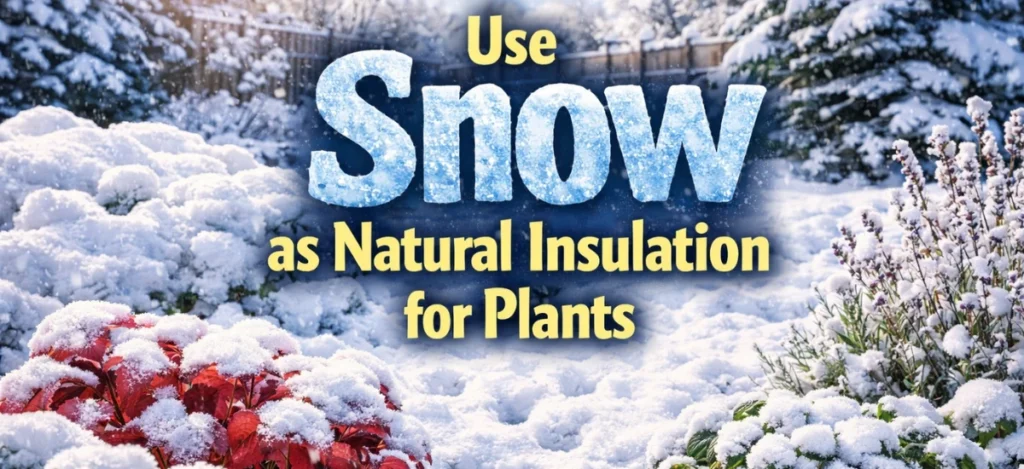
One of the only methods to use snow in the garden is by permitting it to behave as natural insulation. A regular layer of snow facilitates shield plants from unexpected temperature drops and cruel winter winds.
Snow traps air between its layers, growing an insulating barrier that continues soil temperatures rather strong. Even when air temperatures fall a ways beneath freezing, soil underneath snow remains hotter than exposed ground.
This insulation is in particular vital for shallow-rooted plant life and perennials that continue to be inside the ground year-round. Without a snow cowl, roots are more likely to suffer from freeze damage.
Best Types of Plants That Benefit from Snow Insulation
Plants that benefit most from snow insulation include perennials, roses, herbs, strawberries, and newly planted shrubs. Vegetable gardens that incorporate overwintering plants additionally gain safety from snow cover.
If the snowstorm is choppy, gardeners can gently redistribute clean snow from walkways onto lawn beds. This exercise improves insulation at the same time as keeping paths secure and clean.
It is vital to avoid the use of snow that consists of road salt or chemical residues, as these substances can harm soil structure and plant roots.
Using snow as garden insulation is one of the simplest but only wintry weather lawn care practices.
What to Avoid
Do not pile snow that contains road salt or chemicals onto your garden. Salt can damage soil structure and harm plant roots.
Using snow as garden insulation is one of the easiest and most effective winter gardening strategies.
2. Protect Bulbs and Perennials from Freeze-Thaw Damage
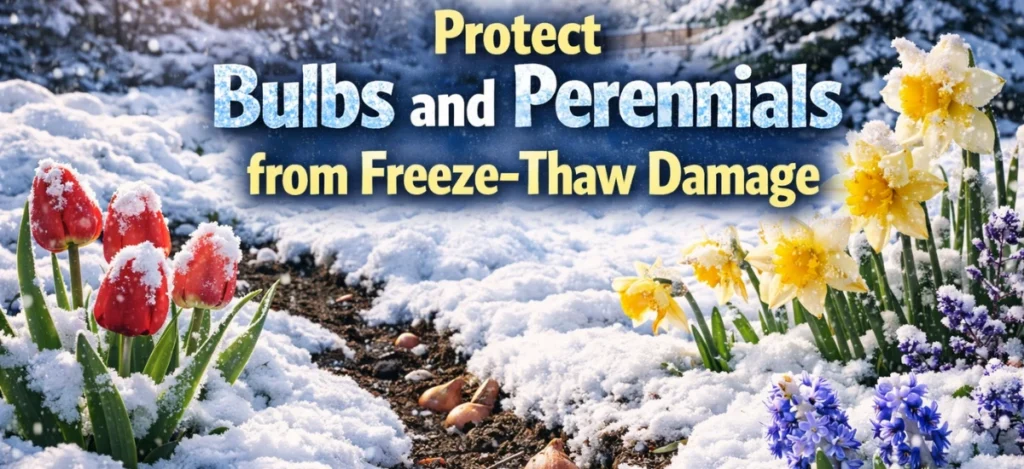
Winter temperature swings are often more dangerous than the cold itself. When soil repeatedly freezes and thaws, bulbs and shallow-rooted plants can be pushed out of the ground.
Why Freeze-Thaw Cycles Are Dangerous for Bulbs
Many gardeners focus most effectively on cold temperatures, but rapid temperature fluctuations are regularly more harmful than cold itself. When soil time and again freezes and thaws, bulbs and younger plants can be driven upward, exposing them to drying winds and frost damage.
Snow allows you to save yourself this hassle with the aid of keeping soil temperatures steady throughout wintry weather.
How Snow Helps Bulbs Stay Dormant and Healthy
Snow cover prevents soil from warming too fast throughout brief wintry weather thaws. This continues bulbs dormant until spring, lowering the threat of early sprouting that can be broken by using later freezes.
Flowering bulbs, which include tulips, daffodils, crocus, and hyacinths, benefit substantially from snow safety. Perennial flowers also rely on snow to keep solid underground situations.
In areas with limited snowfall, gardeners can integrate natural mulch with snow for extra protection. Mulch provides shape, even as snow provides insulation and moisture.
Using snow to guard bulbs ensures a healthier bloom, stronger root structures, and better flowering performance in the following season.
3. Observe Wildlife and Garden Activity Through Snow
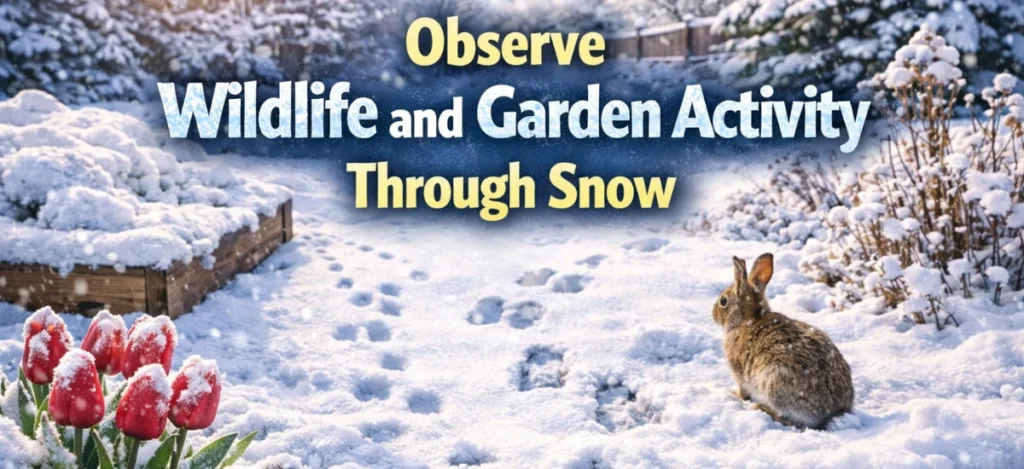
Snow doesn’t just benefit plants — it also gives you valuable insight into your garden ecosystem.
Tracking Wildlife in the Snow
Snow reveals animal tracks clearly, allowing you to see:
- Where rabbits, squirrels, or deer travel
- Whether pests are visiting your garden beds
- How animals interact with fences and barriers
This information helps you plan better garden protection strategies in the future.
Why This Matters for Garden Planning
Understanding wildlife movement allows you to:
- Reinforce vulnerable garden areas
- Adjust plant placement
- Plan natural deterrents
Snow turns your garden into a living map, offering clues you can’t see during other seasons.
4. Snow Provides Slow-Release Moisture for Soil
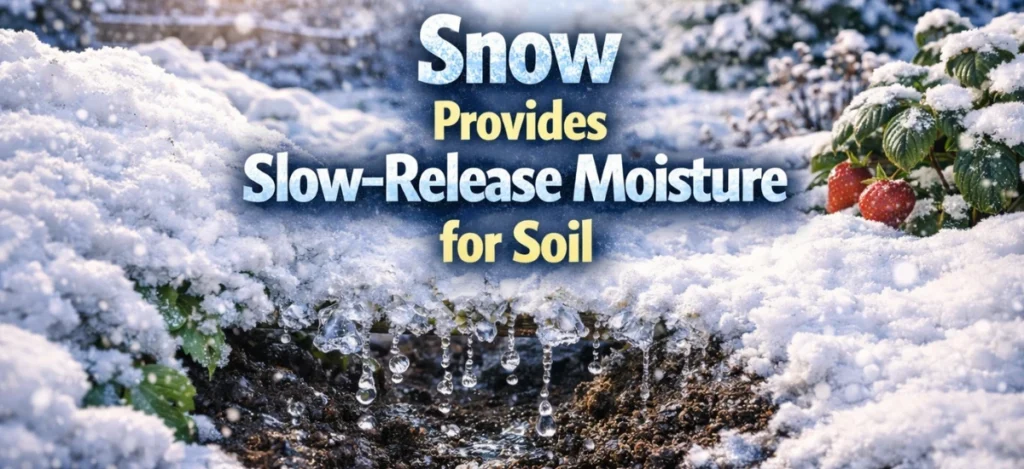
Snow helps keep soil moisture for the duration of wintry weather, whilst watering is confined. By slowing evaporation and releasing water step by step, it maintainsthe soil hydrated underneath the surface. This regular moisture supports root health and prepares garden beds for early spring planting with much less stress on flowers.
Why Snow Moisture Is Better Than Winter Rain for Soil Health
One of the most crucial benefits of snow for lawn soil is the way it manages moisture. Unlike rain, which regularly runs off frozen or compacted soil, snow melts slowly and frivolously. This gradual melting permits water to penetrate deep into the soil, accomplishing root zones in which it’s far maximum wished.
Snow acts as a sluggish-launch irrigation gadget. It provides consistent hydration through the years in preference to surprising saturation. This constant moisture delivery prevents soil cracking, reduces compaction, and helps microbial activity underneath the floor.
For gardeners who enjoy dry winters, snow becomes a vital source of water that prepares the soil for spring planting.
How Snow Moisture Helps Plants
- Prevents soil from drying out
- Supports beneficial microbes
- Strengthens root systems
- Reduces the need for early spring watering
You can even collect clean snow in containers, let it melt, and use it to water houseplants or seedlings.
Snow melt watering for gardens is nature’s most gentle irrigation system.
5. Snow Acts as a Natural, Light Fertilizer
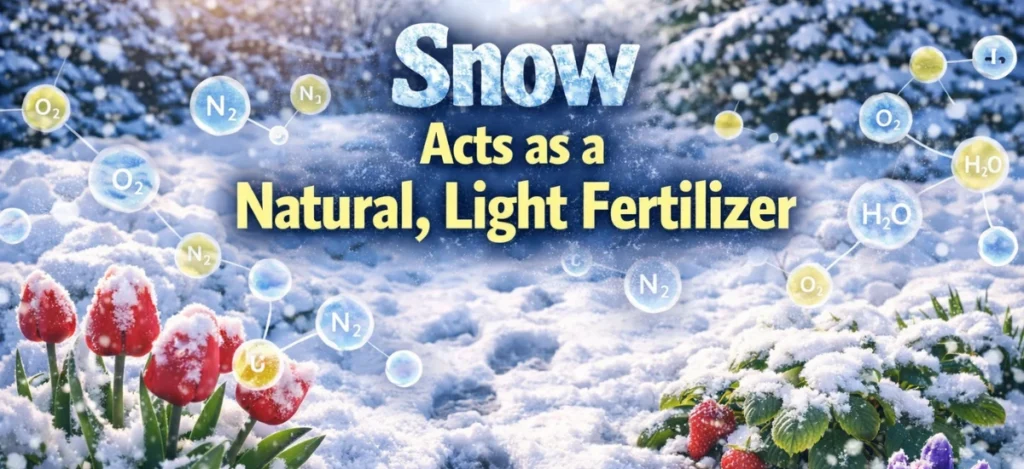
Snow consists of trace vitamins from the environment into the soil as it melts. These vitamins guide useful soil organisms and enhance nutrient cycling. Over time, this herbal method allows soil fertility to be maintained and helps consistent, long-term plant productiveness with out heavy chemical use.
How Snow Fertilizes Soil
As snow forms in the atmosphere, it captures nitrogen particles. When it melts, that nitrogen is released into the soil.
Although the amount is small, it provides a natural boost that supports early spring growth.
Benefits of Snow as a Fertilizer
- Encourages healthy leaf growth
- Supports soil microorganisms
- Reduces need for early synthetic fertilizers
This makes snow a quiet but valuable contributor to long-term soil health.
6. Know When to Remove Snow (And When Not To)
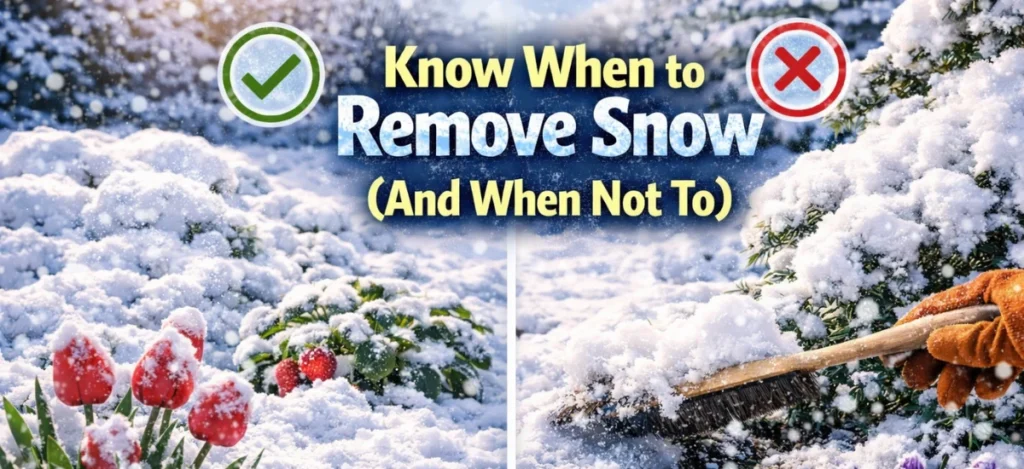
Not all snow situations are identical. Light snow protects soil and plant life, even as heavy snow can damage branches if left out. Understanding how to gently take away snow and allow it to go away untouched enables gardeners to protect plant structure without losing snow’s natural blessings.
How Snow Melt Patterns Reveal Important Garden Information
Snow affords treasured visible clues about how your lawn behaves at some stage in one-of-a-kind temperature situations. Observing in which snow melts first and wherein it lingers longest can help monitor temperature variations, sun exposure, and drainage patterns across your lawn.
Areas where snow melts quickly are typically hotter and receive greater sunlight. These zones are regularly ideal for early spring planting. In assessment, regions where snow remains longer have a tendency to be cooler and can hold moisture for prolonged periods.
By being attentive to these patterns, gardeners have an advantage in perception this is hard to examine during other seasons.
Using Snow Observations to Improve Plant Placement and Soil Management
Gardeners can use snow soften styles to make smarter choices about plant placement. Crops that require warm temperatures and early growth can be planted in areas in which snow melts first. Plants that prefer cooler situations or regular moisture can also perform better where snow lingers.
Snow patterns additionally help identify drainage issues. Areas where snow melts inconsistently or refreezes repeatedly might also require soil development or better water control.
Using snow as a planning tool improves garden performance and results in higher yields, healthier flora, and decreased maintenance attempts over time.
When to Leave Snow Alone
- On garden beds
- Around bulbs and perennials
- Over root zones
Knowing when not to remove snow is just as important as knowing when to act.
7. Use Snow Patterns to Plan for Spring
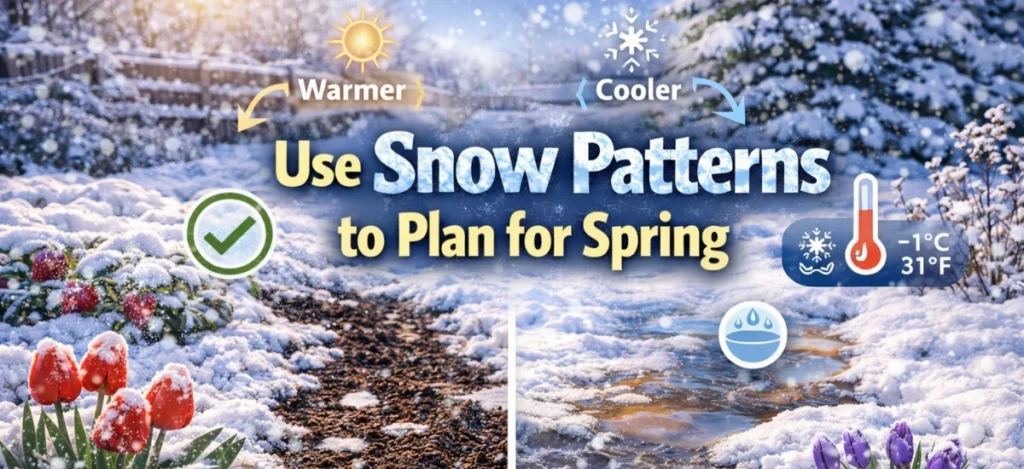
Snow melt styles spotlight heat and funky regions of the lawn. These herbal signs help gardeners determine where to plant early crops, improve drainage, and modify layouts. Using snow as a planning manual results in better plant placement and a more potent increase in future seasons.
What Snow Tells You About Your Garden
Watch how snow melts across your yard:
- Areas where snow melts first are warmer
- Areas where snow lingers longer stay cooler
- Water pooling areas indicate drainage issues
How to Use This Information
- Choose the best spots for early crops
- Improve soil drainage
- Adjust garden bed placement
Using snow as a planning tool leads to smarter garden design and better yields.
Bonus Winter Garden Care Tips
To get the most out of snow:
- Avoid walking on snow-covered beds (it compacts soil)
- Keep paths clear, but move clean snow to garden areas
- Combine snow with organic mulch
- Monitor weather changes closely
Good winter garden care sets the stage for a successful growing season.
Conclusion: Embrace Snow as a Garden Ally
Snow doesn’t have to mean dormant, damaged, or delayed gardens. When you understand how to use snow in the garden, winter becomes an opportunity rather than a setback.
From insulating roots and shielding bulbs to providing moisture and gentle nutrients, snow plays a powerful role in garden fitness. It protects what you’ve already planted and prepares your soil for what’s to come.
Instead of combating snow, work with it. Let it guard your vegetation, nourish your soil, and guide your planning. Come spring, your lawn will thank you with a stronger increase, healthier vegetation, and higher blooms.
So the following time snow falls, smile — your lawn is quietly thriving under it.
Read More: Want a Perfect Living Room? These 11 Elements Matter Most
Frequently Asked Questions About How to use snow in the garden
Yes, snow is useful for garden plants. It acts as natural insulation, protects roots from intense cold, and provides sluggish-launch moisture as it melts.
Snow enables lawn soil by means of preventing erosion, maintaining moisture levels, and releasing small quantities of nitrogen during melting, which improves soil fitness.
No, snow should normally be left on lawn beds. It protects flora and soil. Only eliminate heavy snow from fragile branches to prevent damage.
Snow can partially update watering in winter due to the fact that melting snow slowly hydrates the soil more effectively than rain on frozen floor.
Yes, snow protects bulbs by way of stabilizing soil temperature and stopping freeze-thaw cycles, which can push bulbs out of the floor.
Snow works first-rate when blended with mulch. Mulch provides shape, whilst snow adds insulation and moisture.