
A garden is more than just a plant environment. A garden is also an area where members of the family socialize or relax. Children play in gardens, pets run happily around, and so on. For example, the garden may be where pets play every day, or where cats find places to relax. And Pets run, turn over, smell plants, chew plant leaves, and dig soil. If the garden is not well planned, it might pose hazards to pets.
Many folks are not aware that garden plants, fertilizers, sprays, and stones can also be detrimental to pet health. Some garden plants can cause stomach ailments, vomiting, respiratory disturbances, and potentially fatal health conditions if ingested by pets. Fertilizers and insect sprays can cause paws to burn and can irritate pet skin. Rough stones can cause paws to suffer injuries.
The good news, however, is that there are still ways for you to enjoy a colorful and natural garden without risking the safety of your pets. All you need are proper planning and natural garden maintenance techniques.
This complete guide explains how to build a pet-safe garden that looks natural, feels comfortable, and keeps your pets protected every day.
Why Pet-Safe Gardening Matters for Modern Pet Owners
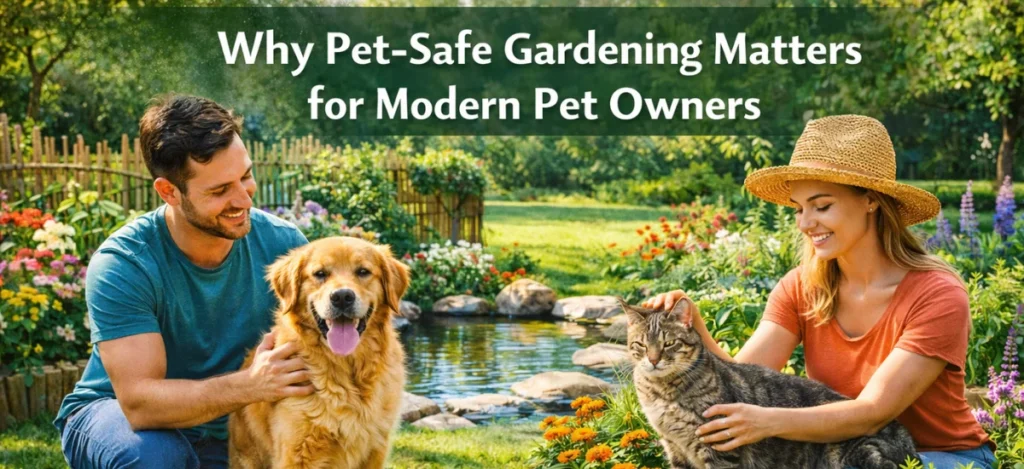
Pets are considered to be part of the family today. We share our houses with our pets, our eating habits, and our lifestyle as well. When our domesticated animals spend time outside in the garden, they come across all the things that grow there and are on the ground as well. Our domesticated animals wouldn’t know which ones are safe for consumption and which ones to stay away from because they don’t possess the same knowledge as human beings.
Dogs like to chew grass, dig soil, and drink water from puddles by licking. Cats like to rub against plants and chew leaves. Even a small amount of the toxic plants mentioned above will cause severe health issues in animals. This leads to the ever-increasing importance of pet-friendly gardening.
Pet gardens are stress-free for pet owners. You can find peace wherever your pet is playing freely without worrying about every single move. A pet-safe garden also helps pets stay active, reduces boredom, and supports their physical and mental health.
How to Design a Pet-Safe Garden That Still Looks Natural
A safe garden need not be dull and empty. You can design one in a way where the natural beauty remains unaltered, and it becomes safe for your pets.
You could begin by compartmentalizing your garden. Design grass areas where the animals can play. Include areas under shades where the pets can relax. Elevate the flower beds to avoid easy digging by the animals. This will also provide the garden with a neat look.
Curved garden paths should be used instead of straight lines in garden designs. In addition, natural stone, wooden logs, and grass borders create soft and serene designs while also making gardens safe for users.
By properly planning the zones, you will make your garden organized, beautiful, and pet-safe.
Choosing Safe and Attractive Plants for a Pet-Friendly Garden
Plants are the foundation of gardening. Some plants can cause dogs to become ill, as well as many others that will not cause problems for dogs.
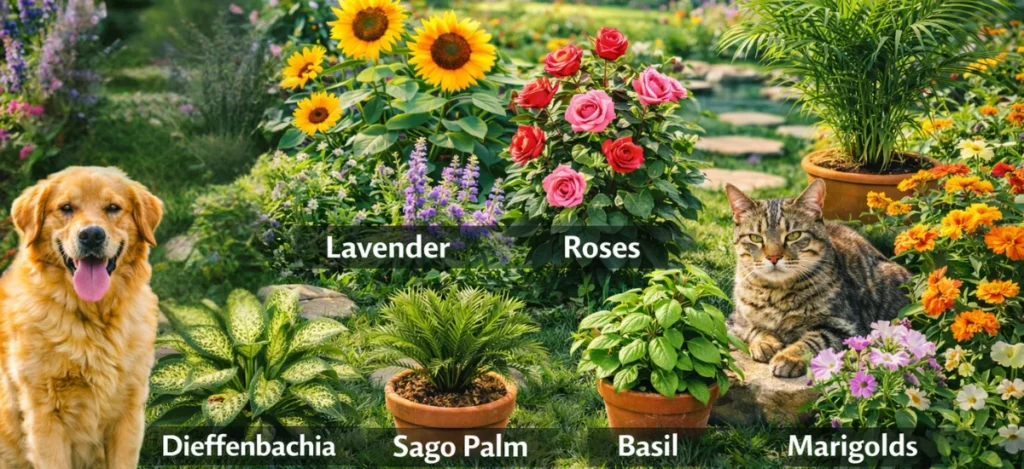
A scent that is relaxed as well as insect repellent is produced by lavender. Sunflowers add a hint of yellow, and they are taller; therefore, they bring life to the garden. Areca palms, bamboo palms, or money plants add greenery to the garden without causing any harm to pets. Roses, marigolds, orchids, or petunias add a hint of color with no adverse effects to pets.
Basil, rosemary, mint, coriander, and thyme are some herbs that are harmless as well as useful in the kitchen. However, these herbs not only add beauty to the garden, but they also provide a natural fragrance.
Planting such plants in your garden will help you have greenery around you, as well as safeguard you from any danger that might pose a threat to your beloved pets.
Harmful Plants That Should Never Be in a Pet-Safe Garden
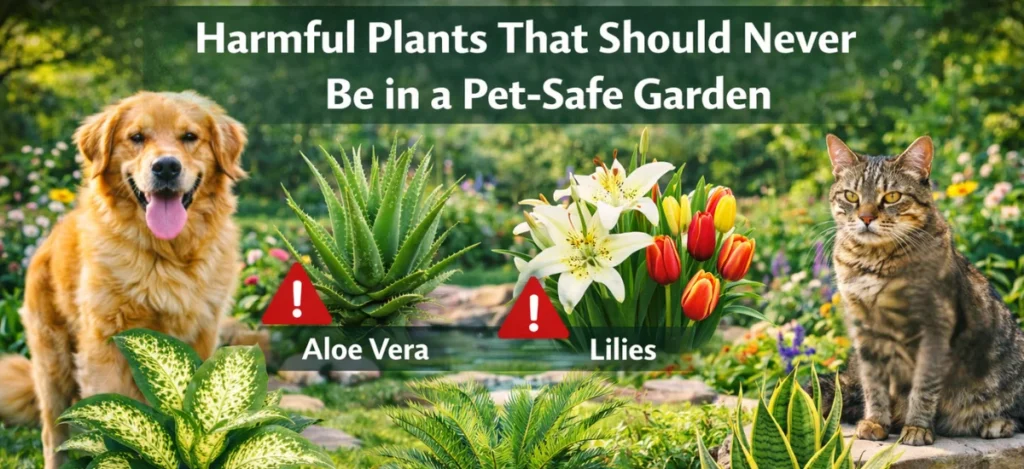
Some plants might be very beautiful and lovely, but they may prove to be toxic to pets. These plants may include: Lilies, Aloe Vera, Snake Plant, Tulips, Daffodils, Sago Palm, and Poinsettias.
Such plants can lead to vomiting, weakness, respiratory problems, and, in extreme instances, failure of vital organs. Pet ownership can result in possible injury by simply coming into contact with or munching on such plants’ tiny components. Eliminating such plants is highly recommended in favor of other options.
Creating Soft and Safe Walking Areas for Pets
The garden surface is as important as the plants. Actually, concrete, rough stones, or sharp gravel can damage paws or joints.
Use natural grass or rubber garden mats. This will not only soften the area where children play or walk around, but also keep it clean. Wooden stepping stones can also be used for walking trails. For play trails, you can also utilize flat stones.
Soft ground will keep your Pets pleased while maintaining a neat and Natural Garden.
Using Natural Fertilizers and Soil Care for Pet Safety
Chemical fertilizers, as well as pesticides, may adhere to the paws of an animal and can be licked afterwards in the event of a pet.
For this purpose, compost prepared from vegetable peels, leaf litter, and garden refuse can be used. Cow dung manure, vermicompost, and neem extracts can also prove to be non-toxic and organic garden materials. They improve soil quality and can even be used on your pets.
Natural soil care also promotes better plant health and the maintenance of gardens that are chemical-free.
Keeping Water Areas Clean and Safe for Pets
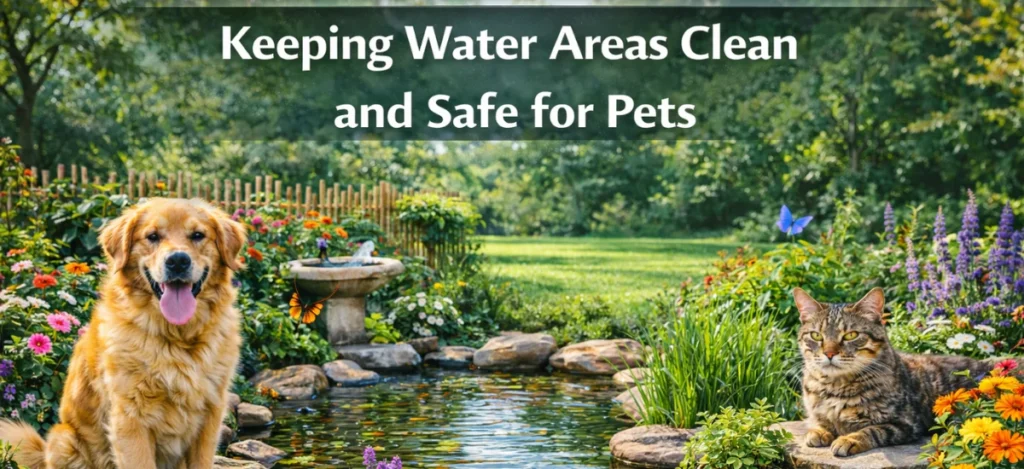
Gardens contain water features such as water receptacles in the form of birdbaths, ponds, and bowls. These features make gardens look more attractive. They, however, require cleaning.
Water that has been dirty tends to be a breeding ground for insects and bacteria, too. Moreover, you need to ensure that the water at all times is fresh. Avoid using chemicals to clean water. Line up areas where you will have water using flat stones to avoid slipping. Also, see to it that the water is not so deep to prevent pets from enjoying a cool drink.
Water features are what give your garden aesthetic and safety.
Creating Comfortable Resting Corners for Pets
The pets prefer to take their nap in a quiet and shaded spot. Ways to create cozy corners for the pets to take their nap would be to make use of tall plants, pergolas, and garden umbrellas.
Add soft cushions to be washed, straw mats, or small grassy areas where pets can lie down. These spots will also add to the inviting and serene effect of the garden.
Natural Fencing That Keeps Pets Safe Without Blocking Beauty
Instead, the use of wood fences, bamboo partitions, or grass hedges should replace the use of metal fencing. Wooden fences offer a more natural element of the garden as pets are also kept safely behind the fences.
A natural fence would be the best choice to make the garden more private and beautiful.
Seasonal Garden Care for Long-Term Pet Safety
In the summer season, provide some shade and water. In the rainy season, eliminate muddy ground and water accumulation. During winter, get rid of leaves.
The garden will remain safe and maintained both for plants and pets through seasonal gardening.
Growing Demand for Pet-Safe Gardens and Future Opportunities

Pet-friendly outdoor areas are increasing in homes, coffee shops, hotels, and housing projects. The modern family, therefore, seeks a green area where pets can roam around.
Increased demand also provides an opportunity for garden designers and suppliers of eco-friendly items. Pet-safe gardening is not just a trend; it is becoming a standard feature in modern homes.
Final Words
The good thing is that a pet-safe garden doesn’t require you to make any sacrifice on aesthetic grounds. You can easily design a garden that is green all year round and yet is pet-friendly, provided you put in some careful thought and planning to do so.
It will turn out to be a happy place in the garden; the pets will run around, and it’s the place where you will enjoy serenity daily.
Read More: Affordable Bedroom Makeover Ideas with Before & After Reveal
Frequently Asked Questions About Pet-Safe Garden
A pet-safe garden avoids toxic plants, chemical fertilizers, sharp objects, and unsafe water areas. It uses soft surfaces, natural soil care, and safe plants.
Yes, flowers such as roses, marigolds, sunflowers, orchids, and petunias will not harm pets.
Yes, it is. Compost made naturally with vegetable waste and dry leaves is non-toxic and enhances soil quality.
Raised beds, natural stone borders, and herbs such as rosemary and lavender should be used.
Good quality artificial turf is also safe, easy to clean, and reduces muddy areas.